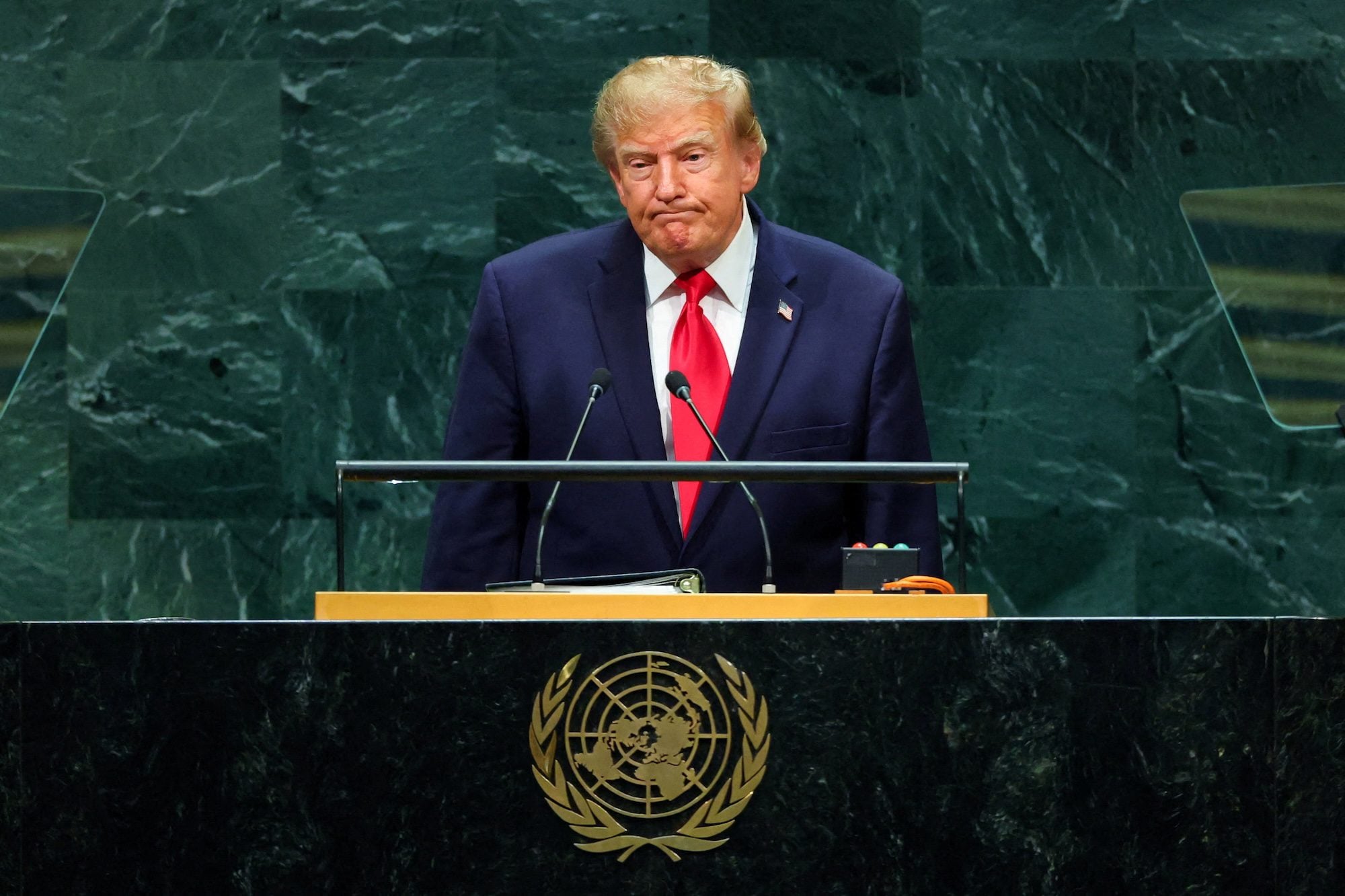
US President Donald Trump urged countries to isolate Iran economically at the UN General Assembly on 22 September, as Tehran offered a conditional reopening of the Strait of Hormuz. According to a Reuters report published by gCaptain, Trump signalled no move towards renewed negotiations in his address, although he said he expected an agreement after the US midterm elections in November.
A senior Iranian official said Tehran could reopen the strait to Gulf shipping within seven days if Washington reduced military pressure and lifted its blockade of Iranian ports. The official said mediators had passed Iran’s latest proposal to the US the previous week. Before the war, Hormuz carried a fifth of global oil and gas shipments, making the reopening central to efforts to restore regional export flows.
US Secretary of State Marco Rubio said Washington remained willing to talk if discussions could produce a positive outcome. However, no direct US-Iran meetings are known to have occurred since July, when an interim agreement to end the conflict collapsed only weeks after its signing. The Iranian official called for Washington to formally commit to diplomacy and agree a timetable, while parliamentary speaker and former negotiating team leader Mohammad Baqer Qalibaf reaffirmed Tehran’s refusal to submit to US pressure.
Separately, sources told Reuters that Saudi Arabia had restarted its East-West Pipeline and could resume exports from Yanbu on the Red Sea within hours, though at lower volumes. The news brought some relief to oil markets on Tuesday. The pipeline, Saudi Arabia’s principal alternative export route around Hormuz, had stopped operating following attacks earlier in September that Riyadh attributed to Iranian allies in Iraq.
Saudi exports through the Red Sea also face threats from Iran-aligned Houthi fighters advancing in Yemen. Trump was scheduled to meet leaders of Bahrain, Kuwait, Qatar, Oman, Saudi Arabia and the United Arab Emirates on Tuesday. Regional sources said their agenda included a Qatari proposal for a shared security framework involving Iran and the Gulf Arab states. One source said Tehran was examining the plan, which Qatar’s prime minister said would require Gulf security guarantees and closer economic ties with Iran.