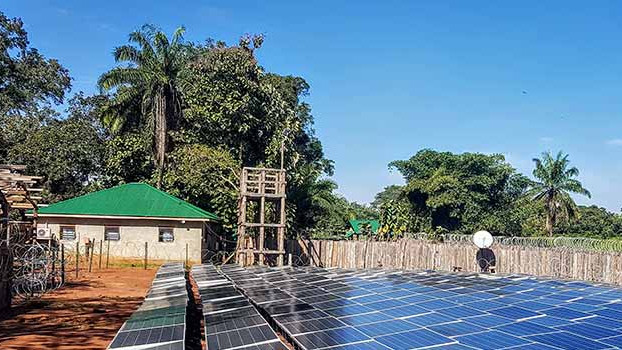
Off-grid solar offers the lowest-cost route to electricity for at least 398 million people currently without access, OilPrice.com reported, citing a joint study by the World Bank’s Energy Sector Management Assistance Program and industry association GOGLA. The study presents the technology as lasting infrastructure rather than a temporary option ahead of grid connections, with systems supplying homes, businesses and factories.
Providing reliable off-grid electricity to that population would require an estimated $11.4 billion between 2027 and 2030. The funding requirement includes annual grants and affordability subsidies of $1.3 billion, alongside $1.6 billion a year in equity, debt and receivables financing. Evidence from customers points to sustained use: 95% of those surveyed still had functioning solar home systems at least four years after purchase.
Affordability nevertheless remains a major barrier. Only around one-third of households lacking electricity can afford a basic Tier 1 pay-as-you-go system, according to the report. A further third would struggle to meet the cost, while the remainder cannot afford one. Across products including home systems, pumps, generators and lanterns, the number of off-grid solar users increased 26% over two years, rising from 118 million to 149 million.
Growth has been uneven across African markets. Kenya, Nigeria and Zambia together accounted for 47% of solar home system sales in sub-Saharan Africa in 2025, while most West and Central African markets showed no growth. Kenya was the largest market among the countries tracked, with sales increasing 61% between 2023 and 2025 to approximately 2.4 million units, OilPrice.com said.
The industry also supports employment and small businesses. Companies tracked by GOGLA employ 219,000 people, with full-time employment rising 29% from 2021 to 2025. Around 7.4 million people use off-grid solar for microenterprises or other income-generating work, producing an estimated $28 billion in additional income and savings over 15 years. Falling equipment costs have supported wider adoption: OilPrice.com reported that Chinese-made panels now cost 12 cents per watt, compared with $5-$6 per watt at the start of the millennium.