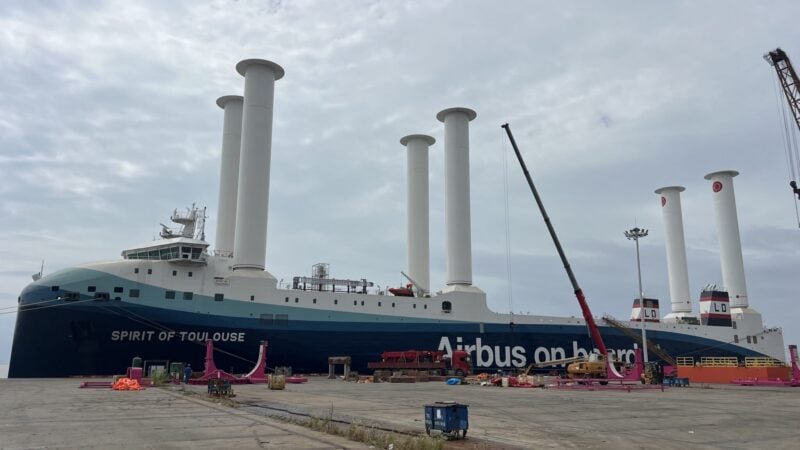
French shipowner LD Armateurs has finished fitting six rotor sails to Spirit of Toulouse, a new roll-on/roll-off vessel intended to carry Airbus aircraft components across the Atlantic, gCaptain reported. The installation took place at an outfitting site in Shanghai, ahead of sea trials that will include testing the wind-propulsion equipment.
The 168-metre ship is the largest RoRo fitted with wind-assisted propulsion and carries more mechanical sails than any other vessel, according to claims by LD Armateurs and technology supplier Norsepower cited in the report. Each rotor is 35 metres high and five metres in diameter. The spinning cylinders provide supplementary thrust, easing demand on the main engines and reducing fuel use when wind conditions permit.
Spirit of Toulouse also has two dual-fuel main engines and two generator sets able to run on e-methanol, bio-methanol or marine diesel oil. The design combines fuel flexibility with wind assistance to lower consumption and emissions, rather than depending solely on alternative fuels. Following its launch in February, the vessel is preparing for trials, with further adjustments planned on its first voyage from China to France.
The ship is the first of three sister vessels being built for LD Armateurs for charter to Airbus. Spirit of Mobile and Spirit of Mirabel will each receive six rotor sails. Together, they will replace Airbus’s existing transatlantic fleet, moving large aircraft assemblies between production sites in Europe and North America.
Airbus expects annual CO2 emissions from those shipping operations to fall from about 68,000 tonnes in 2023 to 33,000 tonnes by 2030, according to gCaptain. Achieving that reduction will depend on vessel efficiency improvements, wind propulsion and access to lower-emission fuels.
The project follows wider adoption led by tankers and bulk carriers. Figures from the International Windship Association cited by gCaptain show more than 100 large commercial ships had wind-propulsion systems by June 2026, against 21 in May 2022. Earlier testing on the Maersk Pelican product tanker produced an independently validated 8.2% reduction in annual fuel consumption using two Norsepower rotors. Separately, Cargill reported average savings of roughly three tonnes of fuel a day during a six-month trial of two WindWings aboard Pyxis Ocean.