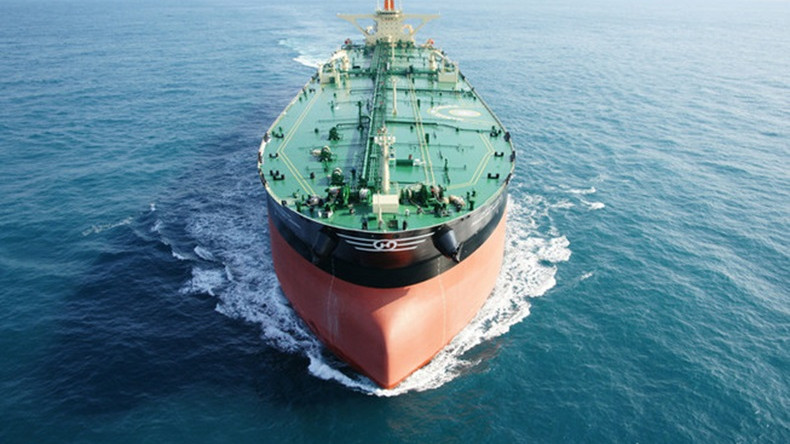
Supertanker freight rates from the Gulf to East Asia exceeded $1.4 million a day in the first week of October as disruption linked to the Iran war tightened vessel availability, OilPrice.com reported, citing Bloomberg data. Rates rose another 40% that week after Persian Gulf-to-China costs had already reached a record above $1 million a day in September.
The shortage reflects the growing use of ship-to-ship transfers in the Gulf of Oman to move crude through the Strait of Hormuz. According to OilPrice.com, very large crude carriers (VLCCs) are spending weeks waiting for transfers outside the strait. Those delays, alongside longer and less efficient voyages, are reducing the number of ships available for other major trades, including US Gulf Coast exports to Asia.
High returns on Middle East voyages are also drawing tankers towards the region despite the risks, further restricting availability elsewhere. At the Energy Intelligence Forum in London, Vitol chief executive Russell Hardy described the shuttle operation through Hormuz as inefficient. He said the conflict had developed from a crude supply crisis into a products crisis and then a shipping shortage, even as more Middle Eastern crude reached the market.
The pressure is evident in US export freight. OilPrice.com cited Bloomberg reporting that one supertanker had been offered for a US Gulf-to-Japan voyage at $82 million, 50% above the level three weeks earlier. It also cited CNBC, whose source familiar with the fixture said Trafigura had chartered a US Gulf Coast-to-China supertanker for $76 million. OilPrice.com put pre-war fees at $7 million-$10 million and estimated the reported fixture represented roughly $38 a barrel in freight.
Producers and buyers are turning to Aframax and Suezmax vessels as VLCC availability tightens, lifting demand and daily rates in those segments too. Shipbroker Fearnleys said Middle Eastern crude exports had surpassed pre-war levels on several days in late September, while rates for smaller tankers continued to strengthen. Argus warned that freight premiums were adding tens of dollars per barrel to delivered crude costs, putting oil trading economics under pressure and raising concerns over demand destruction and whether current pricing could endure.