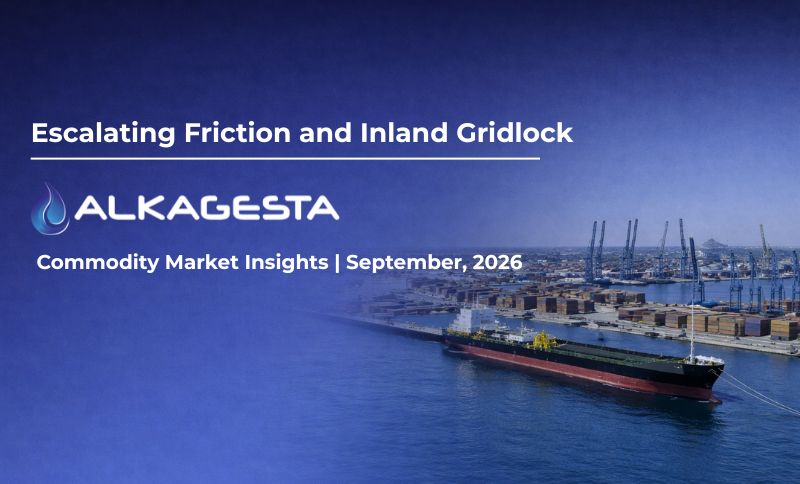
Disruption in the Strait of Hormuz and exceptionally low water levels on the Rhine are putting fuel movements under pressure, according to Alkagesta Newsroom’s September market outlook. The company’s assessment describes a combination of restricted maritime flows from the Middle East and constraints on European inland transport, placing access to supplies at the centre of its market concerns.
Alkagesta reports that US-Iran diplomatic negotiations broke down completely and that military action in the Middle East intensified. Its account says both sides carried out several direct attacks against oil tankers in the Strait of Hormuz over the September 5–6 weekend. Transit numbers fell to nine vessels on September 5 and 14 on September 6, according to the outlook, which characterises the wider energy market as experiencing its greatest volatility of the year.
In Europe, the report puts the water level at Kaub, a critical Rhine navigation bottleneck, at 33 cm on September 7. Alkagesta says the low water severely constrained barge draughts and raised the possibility of navigation on the Upper Rhine stopping altogether. It describes inland logistics as gridlocked, presenting river transport restrictions alongside the Hormuz disruption as concurrent challenges to energy supply movements.
The outlook links those developments to an earlier Singapore Marine Fuels analysis featuring Marine Fuels Distribution Director Mithat Çiftçioğlu. His assessment, as summarised by Alkagesta, was that the central risk for global shipping would be obtaining fuel rather than its price. Alkagesta argues that the reduction in Middle Eastern inflows supports that view.
The publication is a company market assessment drawing on internal analysis and publicly available external information. Alkagesta says some numerical material is derived from or informed by S&P Global Platts publications. It also cautions that its projections may differ materially from eventual outcomes and does not guarantee the information’s accuracy or completeness.