Shortfalls in training, emergency planning and coordination continue to hamper preparedness for ship fires at US ports, gCaptain reported, citing a Government Accountability Office review. The watchdog called for stronger practical exercises and broader vessel response requirements, including rules for tank vessels covering hazardous-substance incidents rather than oil spills alone.
The GAO recorded 886 nearshore marine fires reported to the US Coast Guard between 2015 and 2025. Of these, 206 involved fatalities, injuries, damage exceeding $200,000 or a vessel’s total loss. Federal coordination generally rests with the Coast Guard, while local fire departments tackle the blaze, supported by operators, port authorities and commercial specialists. That division can expose shoreside crews to unfamiliar ship layouts, restricted spaces and dangerous cargoes.
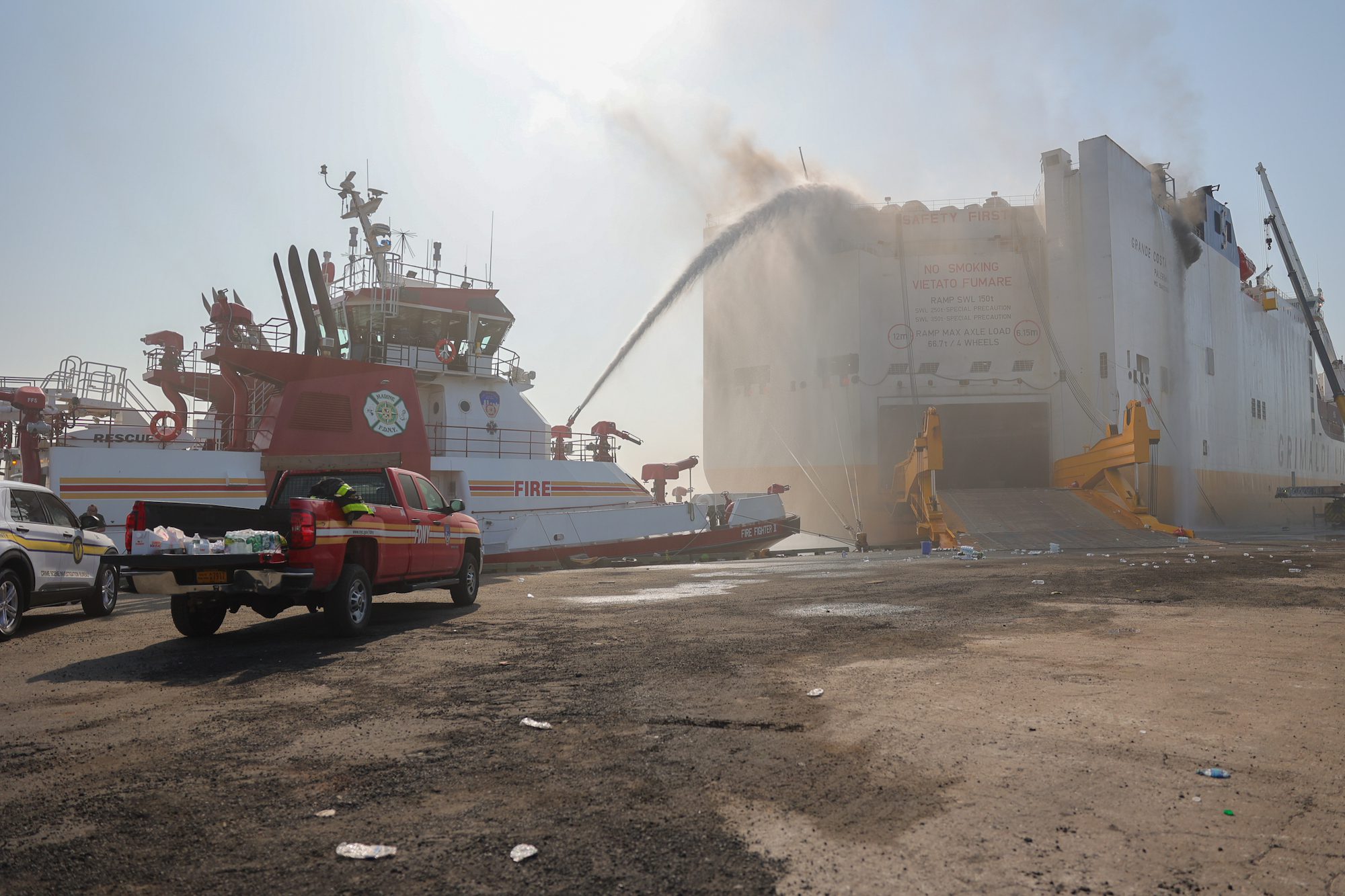
The July 2023 fire on the Italian-flagged vehicle carrier Grande Costa D’Avorio at Port Newark illustrated those risks. Newark firefighters Augusto Acabou and Wayne Brooks Jr. died after crews lost their bearings amid smoke and an unfamiliar layout. Several others were injured. According to Coast Guard figures cited by gCaptain, the fire lasted five days and caused an estimated $23 million in damage. The last training exercise offered to responding firefighters had been nine years earlier, with only one responder having attended.
Practical training remains difficult to organise because port calls are short and shipowners must approve access, fire chiefs told investigators. Although the Coast Guard formed a National Salvage and Marine Firefighting Task Force in January 2024 and developed online resources, the GAO said guidance for hands-on exercises was still absent as of September.
Response-plan activation was another weakness. On Grande Costa D’Avorio, activation came roughly eight hours after the fire started, after local firefighters had boarded. The Coast Guard concluded that acting sooner might have curbed the blaze and damage. Officials and commercial providers told the GAO that operators may delay mobilisation because of the associated costs.
The watchdog also highlighted legal limits on requiring hazardous-substance response plans for some alternative-fuel nontank vessels, including battery-powered ferries, and urged Congress to consider changes. Its five Coast Guard recommendations covered designated field coordination responsibilities, vessel visits and exercises, shared operational lessons, clearer activation guidance and hazardous-substance planning regulations for tank vessels. The Department of Homeland Security accepted all five recommendations, according to gCaptain.